
Exploring the use of NeedleCalm desensitising adhesive pads for blood glucose level finger pricks and continuous glucose monitor sensor changes
Case Overview
Presenting Concerns
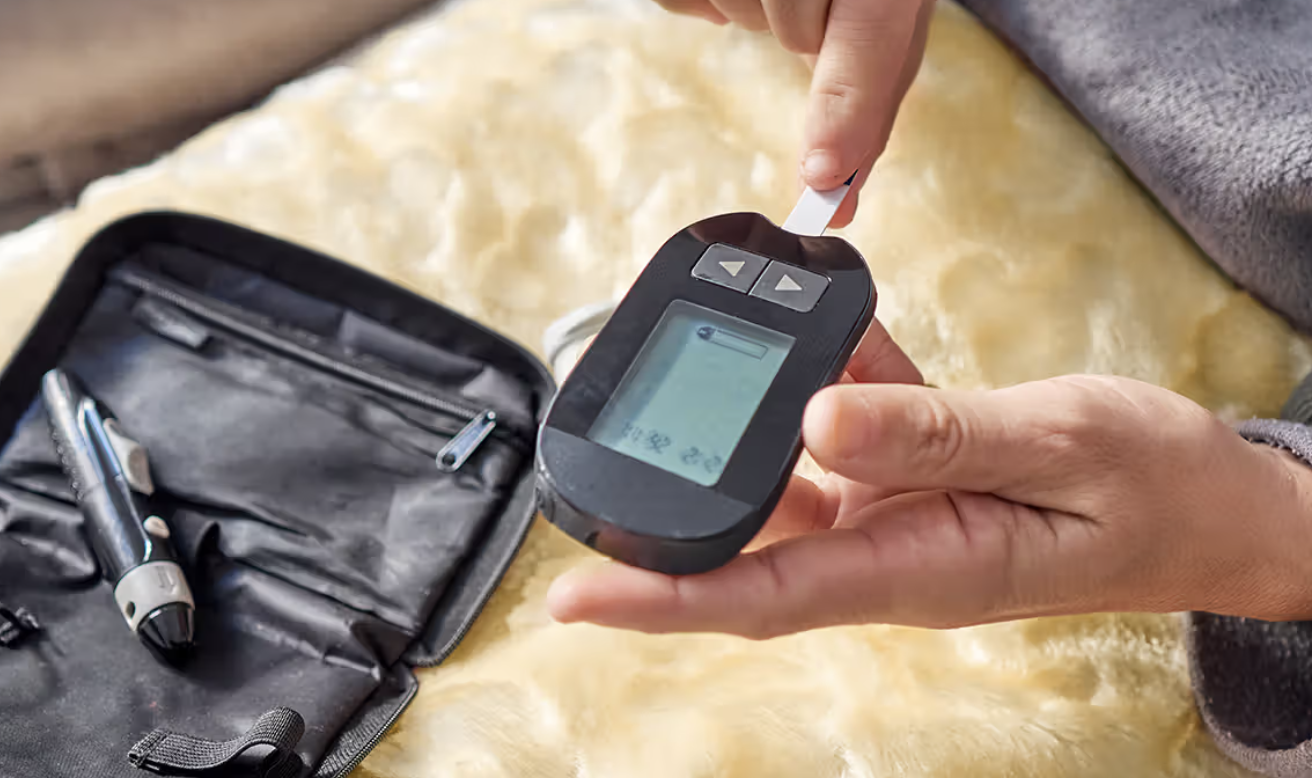
Liam was diagnosed with Type 1 Diabetes Mellitus (T1DM) twelve months prior to this case study period. Following diagnosis, his diabetes management team prescribed a combination of daily insulin injections and regular blood glucose level (BGL) monitoring via finger prick testing. Three months post-diagnosis, Liam was transitioned to a FreeStyle Libre 2 Continuous Glucose Monitor (CGM) to reduce the frequency of finger pricks and provide real-time glucose trending.
Despite this technology, Liam continued to require finger prick testing up to four times daily — upon waking, before meals, during symptomatic episodes, and to confirm CGM readings. He also required CGM sensor changes every 14 days, involving insertion of a small filament beneath the skin of the upper arm.
Liam presented to the diabetes nurse educator with significant distress around all needle-related procedures. His mother reported a pattern of avoidance — delaying or refusing finger pricks, increasing anxiety before sensor changes, and on two occasions removing his CGM sensor early to avoid the change procedure.
Reported Symptoms of Needle Anxiety
- Anticipatory anxiety beginning the night before a scheduled sensor change
- Visible trembling and tearfulness immediately before finger pricks
- Avoidance behaviours including distraction, negotiating delays, and CGM sensor removal
- Elevated heart rate and shallow breathing during procedures
- Refusal to perform self-managed finger pricks at school, leading to unmonitored periods
- Deteriorating HbA1c over the three months prior to intervention, partially attributed to inconsistent monitoring
Introduction of NeedleCalm
NeedleCalm was introduced as a non-pharmacological adjunct to Liam’s existing diabetes management plan. NeedleCalm is a silicone-based adhesive desensitising pad that uses a combination of textured surface stimulation and cooling therapy to activate competing sensory signals in the skin. This approach is grounded in Gate Control Theory of pain, whereby non-noxious tactile and thermal stimuli stimulate A-beta fibres, reducing the brain’s perception of the needle prick.
The device was introduced by the diabetes nurse educator during a routine clinic visit. Liam was encouraged to apply the pad himself to promote a sense of autonomy and control over the procedure.
Application Protocol
BGL Finger Pricks
- Applied to the pad of the chosen finger, adjacent to the prick site, approximately 30 seconds before testing
- Removed immediately following the finger prick
- Liam kept a supply in his pencil case for independent use at school
CGM Sensor Changes
- Applied to the upper arm at the intended sensor insertion site for 60 seconds prior to applicator use
- Liam encouraged to focus on the cool, textured sensation rather than the upcoming procedure
- Distraction technique (preferred playlist) used during the first two sensor changes
- Progressed to independent sensor changes with minimal prompting after three supervised sessions
Outcomes
Short-Term Outcomes (0–4 Weeks)
Within the first week, Liam reported that finger pricks felt ‘barely noticeable’ when NeedleCalm was used. His mother confirmed that avoidance and tearfulness had markedly reduced. By the end of the first CGM sensor change using NeedleCalm, Liam described the experience as ‘much better than before’ — and did not cry for the first time since diagnosis.
Medium-Term Outcomes (4–12 Weeks)
| Outcome Measure | Pre-NeedleCalm | 12 Weeks Post-Introduction |
|---|---|---|
| Finger pricks completed per day | 1–2 (avoidance) | 3–4 (as prescribed) |
| CGM sensors removed early | 2 in 3 months | 0 in 3 months |
| Anticipatory anxiety (0–10) | 8–9/10 | 2–3/10 |
| Independent BGL testing at school | Rarely | Daily |
| HbA1c trend | Worsening | Improving |
| Reported pain during prick (0–10) | 6–7/10 | 1–2/10 |
Qualitative Feedback
“I actually don’t really think about it anymore. I just put it on and do the test. It doesn’t hurt like it used to.”
— Liam, 15, at 12-week review
“Before NeedleCalm, every single finger prick was a battle. Now he just does it himself. It’s made such a difference to all of us.”
— Liam’s mother
Discussion
This case illustrates the significant and often underestimated impact that needle anxiety can have on the safe self-management of Type 1 Diabetes in young people. Liam’s avoidance behaviours — including incomplete BGL monitoring, early CGM removal, and refusal to test at school — placed him at measurable clinical risk, contributing to deteriorating glycaemic control.
NeedleCalm provided a low-barrier, non-pharmacological intervention that addressed the sensory component of needle anxiety using the well-established Gate Control Theory of Pain. By occupying tactile and thermal nerve receptors in the skin immediately prior to the needle procedure, the device reduced Liam’s perception of pain, which in turn reduced the anticipatory anxiety feeding his avoidance cycle.
Critically, the device also offered Liam a sense of agency over his care. Self-application was an important component — rather than having a procedure done to him, he became an active participant in managing his own comfort. This aligns with evidence-based approaches to procedural anxiety in adolescents, where perceived control is strongly associated with reduced distress.
Recommendations for Practice
- Routine screening for needle anxiety should be incorporated into initial and ongoing diabetes management reviews for all young people with T1DM
- NeedleCalm should be offered as a first-line non-pharmacological intervention for children and adolescents with avoidance behaviours or procedural distress
- Self-application should be encouraged from the outset to promote autonomy and reduce reliance on a carer or clinician being present
- NeedleCalm use should be combined with behavioural strategies such as distraction, controlled breathing, and positive reinforcement
- Ongoing monitoring of adherence to glucose testing and CGM use should consider needle anxiety as a contributing factor where monitoring gaps are identified
- Healthcare professionals should advise parents and carers that improvement may be gradual, and that consistency across home and school settings is important for sustained benefit